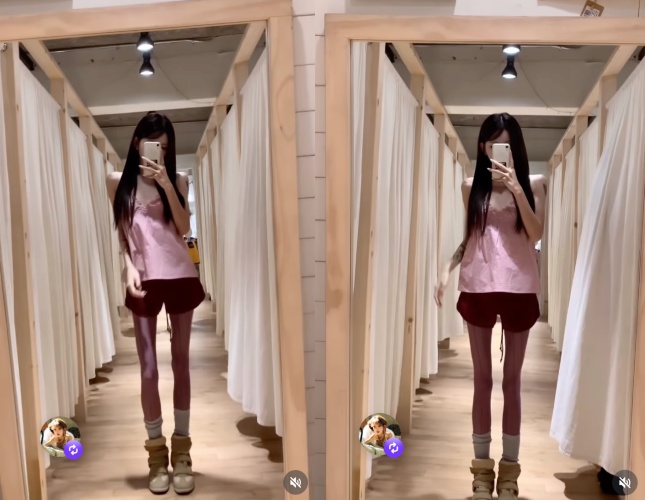
Influencer Choi Jun-hee poses for a photo. (Jun-hee Instagram)
The ultra-slim body trend in entertainment isn’t new—but in K-pop, it’s becoming highly visible again. And this time, its influence feels more immediate, more amplified, and more difficult to ignore.
At the heart of the issue is how the K-pop industry operates. Idols are not just musicians—they are carefully curated visual performers. From styling and choreography to camera framing, nearly every element of their presentation is designed to enhance a specific image. More often than not, that image favors a slim, tightly controlled physique.
That doesn’t automatically mean unhealthy standards. But it does create a system where maintaining a narrow body type isn’t just encouraged—it’s often expected.
What’s different now is the scale of exposure. Platforms like Instagram, TikTok, and YouTube Shorts don’t just showcase idols—they algorithmically reward certain visuals. Slim silhouettes, sharp styling, and “aesthetic” edits consistently perform better, reinforcing the idea that thinner equals more desirable.

And this influence doesn’t stay within fandom spaces.
Young audiences—especially female students—are particularly vulnerable to these visual cues. As idols become global role models, their appearance inevitably shapes how fans perceive beauty, discipline, and self-worth. In some cases, this can contribute to a growing trend of extreme dieting and unhealthy body expectations among impressionable viewers.
This is where the conversation becomes uncomfortable—but necessary.
Because when one body type dominates across one of the world’s most influential music industries, it doesn’t just reflect a standard. It helps define it.
Of course, not every idol who appears slim is unhealthy, and not every agency enforces the same expectations. The issue isn’t about individuals—it’s about patterns. And right now, the pattern is difficult to ignore.
There are, however, signs of change. Some idols have begun speaking more openly about health, burnout, and the pressures behind maintaining a certain image. Fans are also becoming more vocal, calling for healthier and more diverse representations.
Still, awareness alone may not be enough.
K-pop’s global reach gives it enormous cultural influence. With that comes responsibility—not just to entertain, but to consider the messages being sent to millions of young fans watching, imitating, and internalizing what they see.
The question now isn’t whether beauty standards will exist—they always will.
The real question is this:
Will K-pop continue to reinforce a single, narrow ideal—or will it help redefine what healthy and confident beauty really looks like?

Allen Shin is an editor at Kpopbreaking.com, specializing in K-pop industry news, artist activities, and breaking developments.
📧 Contact: worldpopkorea@gmail.com


Comments